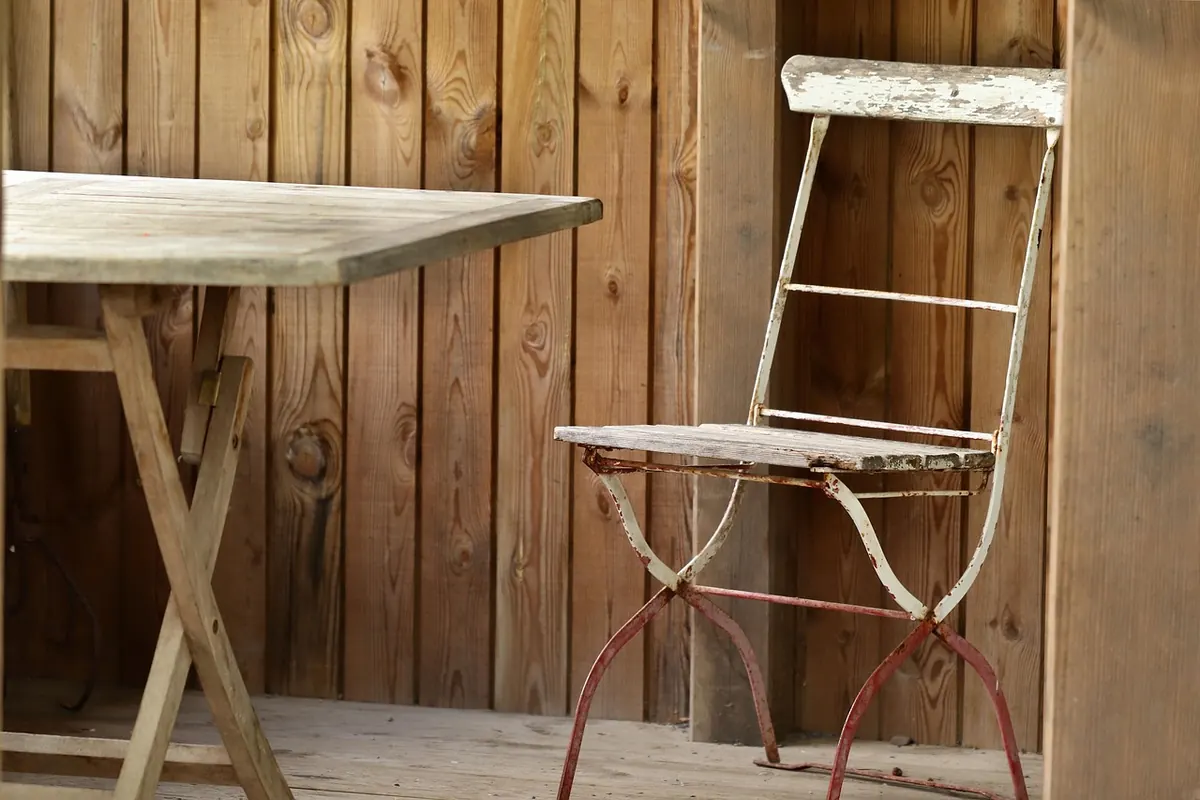
Two tins sit side by side on the shelf at the garden centre. One says oil, one says stain, and both promise to look after the table you spent a weekend sanding. The difference matters more than the label suggests: oil feeds the timber and keeps its grain on show, while stain changes the colour and builds a layer between the wood and the weather. Pick the wrong one for your furniture and your routine, and you will be back out there with a brush far sooner than you hoped.
What oil does to wood
Oils soak in. A good oil penetrates the surface fibres, replacing some of the natural oils that weather out over a season, and leaves the timber supple rather than dry and brittle. There is no film sitting on top, which is why an oiled table shows every knot, swirl and grain line.
It does not need much to work. Thin coats, worked in with a cloth or brush and any excess wiped off, do far more than a thick slather that stays tacky on the surface.
Which oil?
Teak oil is usually a blend of oils and solvent — thin, easy to apply, quick to dry. Tung oil penetrates well and cures hard. Danish oil often contains a little resin, which gives a low sheen and slightly more surface protection. Traditional raw linseed oil works, but it dries slowly and in damp British conditions it can leave a surface that mould enjoys. Whichever you choose, one rule holds firm: oil goes onto bare or previously oiled wood, never over a stained or varnished surface.
What stain does
Stain is pigment carried in a binder. That pigment either sinks into the fibres or sits on them, depending on the product, and it is what changes the colour of the wood in a way oil never will.
Two kinds of stain
Penetrating stains colour the timber and leave almost no film. They are forgiving to top up, because the next coat soaks in alongside the last one. Film-forming stains, which include many coloured garden furniture preservers, build a coat on the surface. They last longer and give a more even, opaque finish, but when that coat breaks down it flakes, and water can creep underneath.
Exterior products usually add UV blockers, water repellents and mould inhibitors to the mix. That combination — pigment, film, additives — is why a well-stained bench can go two or three seasons without attention.
Colour: feeding the wood versus painting it
Oil enriches. It deepens the natural colour, warms it up and gives a slightly wet look that fades to a softer glow. Teak turns a honey gold, iroko darkens to a rich brown, oak takes on a warmer tone. Leave any of them and the wood will still silver to grey over a couple of years — an oiled surface just greys more slowly and more evenly. If you want timber to stay looking like timber, oil is honest about it.
Stain decides. You can go lighter, darker, grey, sage green or pillar-box red. Translucent stains let the grain show through; solid ones cover it completely. On a set where the slats came from different boards and never quite matched, stain is the only finish that will make them look like one piece of furniture.
Protection: two different jobs
Both finishes help, but they help in different ways. Oil keeps water out by keeping the wood itself in good condition — supple, sealed at the surface, less able to absorb. Stain adds pigment that takes the hit from UV before it reaches the timber, plus a binder that slows water down.
Neither is armour. Water sitting in joints, trapped under a planter, or pooling on a leg end will cause rot regardless of what you brushed on. Pay extra attention to end grain, which drinks finish like a sponge, and to the feet, which live in the damp.
The simplest test is water. On oiled wood, drops should bead and sit for a while. When they sink in and darken the surface instead, it is time for another coat.
Maintenance: how often, and how much work
This is where the two paths really diverge.
- Oiled furniture: an annual coat, usually in spring, plus a spot top-up on the tabletop and arms if they sit in full sun. Clean with warm water and a mild soap, let it dry for a day or two, then apply thin coats and wipe off the excess.
- Penetrating stain: top up every one to three years, cleaning first and lightly sanding dull or worn patches so the new coat can grip. No sanding back to bare wood required.
- Film-forming stain: recoat when the surface starts to look tired, and be ready to sand and feather failing edges. Once it peels, patch repairs rarely disappear completely.
Some jobs are the same either way. Work in the shade on a dry, mild day rather than in blazing midday sun, which dries the finish before it can soak in. Sand along the grain with a fine grit. And never apply oil over stain, or stain over oil — the new finish will not take, and you will end up sanding the whole lot back.
Which should you choose?
A few honest scenarios make the decision quicker.
- You love the natural grain and do not mind a yearly job: oil.
- The boards are mismatched, or you want a particular colour: stain.
- The furniture sits in full sun and driving rain: a stain with UV blockers, or an oil plus a firm annual routine.
- You want the least work overall: a good film-forming exterior stain, applied properly to bare, dry wood.
- You are not sure yet: test both on the underside of a table or the back of a slat, and look again in a month.
Before you open the tin
Read the label and follow it. Products vary enormously, and a tin of exterior stain is not the same as a tin of teak oil, even when they promise similar things. Test on a hidden area first, especially with stain, where a colour can look very different on your timber than it did on the swatch.
Two thin coats beat one thick one, both for looks and for drying. Keep a note of the exact product you used, so next year's coat matches the last. If the furniture is going into storage or under a cover for winter, do that after the finish has fully cured rather than the same afternoon.
One safety point worth repeating: cloths and rags soaked in oil can heat up as they dry and catch fire. Spread them flat outside to dry, or soak them in water before binning. It sounds unlikely until it happens in a shed full of timber.
Photo: ClickerHappy / Pixabay